


News
LONGHUA NEW MATERIALS
The difference in mesh size of heavy calcium powder
Release Time:
2024-09-12 10:44
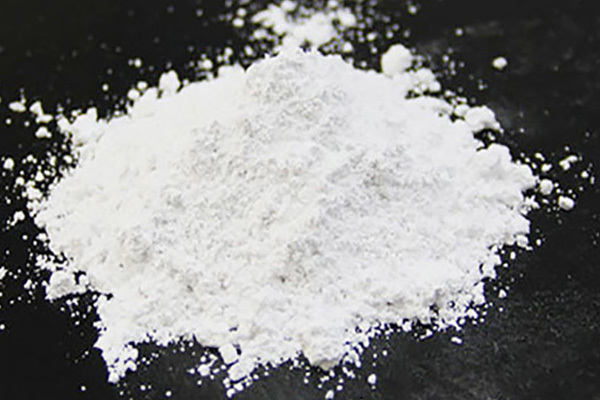
Heavy calcium powder (heavy calcium carbonate) is a fine powder made from natural limestone through mechanical crushing, grinding and other processes. Due to its low cost and wide application, it is often used in plastics, rubber, coatings, papermaking and other fields. Heavy calcium powder of different mesh numbers has different physical properties and application fields, therefore, understanding the difference in mesh number of heavy calcium powder is crucial for reasonable selection and application.
1. Definition of Heavy Calcium Powder Mesh Number
The mesh number of heavy calcium powder refers to the fineness of its particles, usually expressed in mesh number (mesh). The higher the mesh number of the screen, the smaller the diameter of the particles. Common mesh numbers of heavy calcium powder include 325 mesh, 600 mesh, 800 mesh, 1250 mesh, 2000 mesh, etc. The larger the mesh number, the finer the particles of heavy calcium powder.
For example, 325 mesh means that the heavy calcium powder can pass through the aperture formed by 325 screen lines per inch, that is, the maximum diameter of the particles is about 45 microns. The particles of 1250 mesh heavy calcium powder are smaller, with a particle size of about 10 microns. Therefore, the difference in mesh number directly affects the particle size and surface area of heavy calcium powder.
2. Characteristics of Heavy Calcium Powder with Different Mesh Numbers
Heavy calcium powder with different mesh numbers has significant differences in physical properties and applications, specifically in the following aspects:
(1) Particle Size
The higher the mesh number, the smaller the particle size of the heavy calcium powder. Low-mesh heavy calcium powder (such as 325 mesh) has a larger particle size and rougher particles, while high-mesh heavy calcium powder (such as 1250 mesh and above) is finer and closer to the micron level. This difference in particle size will affect the dispersibility and compatibility of heavy calcium powder in different substrates.
(2) Specific Surface Area
Specific surface area refers to the total surface area of a material per unit mass. High-mesh heavy calcium powder, due to its small particles, has a large specific surface area, which can provide more contact interfaces and is therefore easier to combine or react with other materials. In coatings and plastics, fine-particle heavy calcium powder can not only improve the gloss of the product, but also enhance the mechanical properties of the material.
(3) Oil Absorption
Oil absorption is a measure of the ability of a powder material to absorb oily liquids, and is usually used to evaluate its dispersion performance in different media. Generally speaking, the higher the mesh number, the smaller the particle size, and the higher the oil absorption. High-mesh heavy calcium powder, due to its large surface area, will also have a correspondingly increased oil absorption. This is very important in the paint and coating industries, because oil absorption directly affects the rheology and film-forming properties of the product.
(4) Dispersibility and Filling Property
High-mesh heavy calcium powder has small particle size and smooth surface, and is easy to disperse uniformly in the matrix, suitable as a filler for high-quality materials. Although low-mesh heavy calcium powder has poor dispersibility, it still has its unique advantages in applications with low dispersibility requirements, such as papermaking and building materials. Low-mesh heavy calcium powder has strong filling capacity and can significantly reduce production costs.
3. Importance of Heavy Calcium Powder Mesh Number Selection
When selecting the mesh number of heavy calcium powder, it is necessary to judge according to the specific application requirements. The following are some application differences of heavy calcium powder mesh number in typical industries:
(1) Plastics Industry
The plastics industry usually uses high-mesh heavy calcium powder, such as 800 mesh or 1250 mesh. High-mesh heavy calcium powder can improve the surface smoothness of plastic products and enhance the wear resistance and toughness of plastics. In addition, high-mesh heavy calcium powder has high oil absorption, which is beneficial to enhance the coloring performance of plastics.
(2) Rubber Industry
The rubber industry has relatively low requirements for heavy calcium powder, usually using 325 mesh to 600 mesh heavy calcium powder as a filler. The main function of heavy calcium powder is to improve the wear resistance and hardness of rubber products, while reducing production costs. Therefore, the rubber industry prefers to choose low-mesh heavy calcium powder to maintain its strength and elasticity.
(3) Papermaking Industry
The papermaking industry has high requirements for the mesh number of heavy calcium powder, usually using 800 mesh or 1250 mesh heavy calcium powder. Heavy calcium powder can not only increase the whiteness of paper, but also improve the smoothness and printability of paper. Using high-mesh heavy calcium powder in paper can improve the texture of paper products, while reducing pulp consumption and reducing production costs.
(4) Coatings Industry
The coatings industry has very high requirements for the fineness of heavy calcium powder, usually using ultra-fine heavy calcium powder above 1250 mesh. This is because high-mesh heavy calcium powder can provide a smoother surface effect, while having good hiding power and dispersibility. In high-end coating products, ultra-fine heavy calcium powder is an indispensable filler, which can significantly improve the gloss, wear resistance and crack resistance of the coating.
Balance in the Selection of Heavy Calcium Powder Mesh Number
Although high-mesh heavy calcium powder has many advantages, such as better dispersibility, gloss and mechanical properties, not all application scenarios require the use of high-mesh heavy calcium powder. In practical applications, the selection of mesh number should not only consider the performance of the material, but also balance the economic cost.
High-mesh heavy calcium powder has a higher price due to its complex production process. If the application does not have high requirements for the fineness of heavy calcium powder, excessive use of high-mesh products will lead to unnecessary cost increases. For example, in papermaking or building materials, where the requirements for dispersibility and gloss are not high, choosing 325 mesh or 600 mesh heavy calcium powder can meet the needs, ensuring material performance while effectively controlling costs.
For some special applications, such as high-end coatings or precision plastic products, although ultra-fine heavy calcium powder is expensive, the performance improvement and market value it brings far exceed its cost. For such high-value-added products, choosing a higher mesh number of heavy calcium powder is a wise investment.
The mesh number of heavy calcium powder is a key factor affecting its performance and application range. Heavy calcium powder with different mesh numbers has significant differences in particle size, specific surface area, oil absorption, and dispersibility. Therefore, in practical applications, it is necessary to reasonably select according to the specific needs of the product. Low-mesh heavy calcium powder is suitable for industries with low fineness requirements and cost sensitivity, while high-mesh heavy calcium powder is suitable for high-end fields with strict requirements on material performance.
When selecting precipitated calcium carbonate, companies should strike a balance between performance and cost to achieve both economical and efficient production goals.
Related News

Contact Person: Mr. Li
No. 8 Dada Street, Beitou Environmental Protection Water Conservancy Three-sheng Stacking Yard, Bonded Port Area, Qinzhou Port Area, China (Guangxi) Pilot Free Trade Zone
Online Message
*Please fill in the correct information