


News
LONGHUA NEW MATERIALS
Production, modification and application of compound active calcium carbonate
Release Time:
2023-09-18 21:16
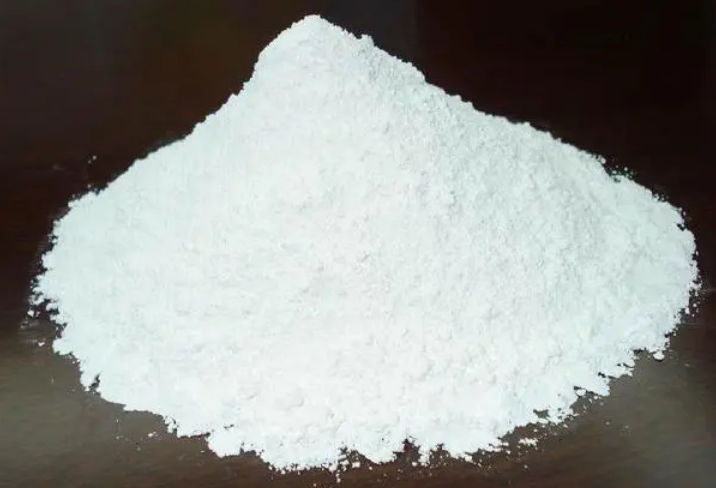
Production, modification, and application of compounded active calcium carbonate; The so-called compounded calcium carbonate products usually refer to products where heavy calcium carbonate is the main component (>50%), with a certain proportion of light calcium carbonate powder. Through compounding and modification techniques, light and heavy calcium carbonate are mixed and modified together, which can effectively balance the differences between light and heavy calcium carbonate, combining the advantages of both. This significantly reduces product costs, expands the application range, and improves product quality.
Production process of compounded active calcium carbonate
Based on the dry process for producing heavy calcium carbonate, the following two processes can be used for compounded active calcium carbonate:
★The first is to mix and grind heavy and light calcium carbonate with a certain particle size and ratio → modification → grading;
★The second is to grind and grade heavy and light calcium carbonate separately → modification.
Its characteristics are: simple process, small equipment investment, and direct packaging after output. It is especially suitable for the modification process of calcium carbonate using coupling agents.
Based on the wet process for producing heavy calcium carbonate, the following process can be used for compounded active calcium carbonate: wet mixing and grinding of heavy and light calcium carbonate adjusted to a certain concentration of slurry → modification → slurry product → drying → dry powder product.
Its characteristics are: wet activation is the treatment of calcium carbonate particles in a liquid phase, which can uniformly coat the calcium carbonate. The surfactant can be fully dispersed on the surface of the calcium carbonate particles through steric hindrance and double-layer effects, increasing the distance between the particles. During dehydration and drying, secondary agglomeration of particles is reduced, and the obtained product has a fine particle size, low bulk density, and good fluidity and dispersibility.
Surface modification methods for compounded active calcium carbonate
The correct selection of modifiers should not only consider the affinity and miscibility of the modifier with calcium carbonate and the pigments used, but also the miscibility of the modifier with other chemical auxiliaries in the matrix, especially the compatibility effect of modified calcium products and auxiliary agents used in plastic systems.
Currently, the surface modification methods for compounded calcium carbonate mainly include surfactant modification, coupling agent modification, reactive monomer and active macromolecule modification, and in-situ polymerization modification.
(1) Surfactant modification method
Currently, there are many types of surfactants used for modifying calcium carbonate, with large production capacity and low prices. They can be mainly divided into two categories: fatty acid (salt) and titanate esters.
(2) Coupling agent modification method
One end of the coupling agent molecule is a polar group, which can chemically react with the hydroxyl groups on the surface of calcium carbonate to form stable chemical bonds; the other end is a non-polar group, which coats the surface of the calcium carbonate particles, making their surface lipophilic. This reduces the surface free energy, improves miscibility with the resin, and gives the composite material better physical and mechanical properties. Currently, the coupling agents used for calcium carbonate modification mainly include titanate coupling agents and aluminate coupling agents.
(3) Polymer modification method
Polymers can be directionally adsorbed on the surface of calcium carbonate, giving calcium carbonate charge characteristics and forming a physical and chemical adsorption layer on its surface, preventing calcium carbonate particles from agglomerating and improving dispersibility. Generally, polymer-coated calcium carbonate can be divided into two categories:
One is to first adsorb the polymer monomer on the surface of calcium carbonate, and then initiate its polymerization to form an extremely thin polymer film layer on its surface;
The other is to dissolve the polymer in a suitable solvent and then add calcium carbonate. When the polymer gradually adsorbs on the surface of calcium carbonate, the solvent is excluded to form a coating.
(4) In-situ polymerization modification method
In-situ polymerization is a method where particles are first uniformly dispersed in a monomer, and then polymerization is initiated by an initiator. The particles or molecules are uniformly dispersed in the polymer matrix to form core-shell structured particles with an elastic coating. Compared with traditional filled polymer materials, in-situ multiphase polymerization ensures uniform dispersion of the filler particles.
Common problems and cause analysis in application
The problems frequently encountered with compounded active calcium carbonate in plastics mainly involve the effective dispersion of the powder, the gloss of the product surface, the extrusion performance during the product processing, and the stability of the color.
(1) Powder dispersion problems
★Incomplete surface coating treatment of the activator and high oil absorption value can easily lead to material sticking to the wall during dry powder mixing and poor compatibility with plasticizers such as DOP, resulting in prolonged mixing time;
★High pH value of the product, especially when it exceeds 10, changes the dielectric properties of the powder particle surface, increases the charge amount, and the product clearly shows phenomena such as easy sticking to the wall, easy dusting, and difficult mixing;
★Heavy calcium carbonate can effectively improve the processability, but if too much heavy calcium carbonate is added or the particle size is too large, it will easily cause poor surface flatness of the masterbatch and a rough feel.
(2) Product surface gloss problems
★When the particle size of the powder is large, many small particles are clearly visible on the surface of the extruded granules after plasticization, the surface reflection is reduced, and the light scattering effect makes the surface of the granules dull;
★Due to the formation of latex-like bubbles during the plasticization process, after the material is extruded and cooled, the positions of the tiny bubbles form cavities, the surface becomes uneven, and the gloss is reduced;
★When the surface gloss of the product is good after extrusion, but after the material is cooled and stored for a period of time, a "hazy surface" appears. The main reason is that excessive stearic acid is used in the material, causing some stearic acid to precipitate;
★Poor surface flatness of the product is mainly due to high colloid viscosity and poor fluidity.
(3) Deterioration of extrusion performance
★Slow extrusion speed is due to excessive calcium carbonate filler, resulting in increased viscosity, poor plasticization, and reduced extrusion speed;
★Poor material flow is mainly due to the strong adsorption capacity of light calcium powder particles to plasticizers, which affects the normal plasticization of the material and prolongs the plasticization time.
(4) Color stability issues
★The whiteness of calcium carbonate powder itself is low and unstable;
★The powder contains a small amount of oxide impurities;
★The pH value of calcium carbonate powder is too high;
★The oil absorption value of calcium carbonate powder is too high.
Key points in the production of compounded active calcium carbonate
To produce high-quality compounded active calcium carbonate to meet the needs of downstream users, the following key points should be noted:
(1) Selection of high-quality raw materials
For calcite and limestone, high-whiteness, low-impurity raw materials should be selected, and the magnesium oxide content in the ore should be controlled, with a magnesium oxide content below 0.5% being optimal. Low magnesium oxide content can reduce the pH value and oil absorption value of the powder.
(2) Optimize the ratio and particle size range of heavy calcium and light calcium
While effectively improving the flowability of the material, it can also effectively improve the surface quality of the product.
(3) Strictly control the material of the equipment used in powder processing
Generally, stainless steel material should be selected to avoid impurities such as iron rust from entering the product. In particular, activation equipment and drying equipment must use stainless steel materials to avoid rusting due to contact with activators (generally slightly acidic); wet materials in contact with drying equipment can easily corrode carbon steel equipment.
(4) Surface coating process of calcium carbonate powder
When surface coating (insufficient amount of coating agent is added), the lipophilic property of the powder is reduced, and the compatibility with the plasticizer is reduced. It is necessary to ensure that after the calcium carbonate is surface-treated with a surfactant, a high degree of activation is obtained.
Related News

Contact Person: Mr. Li
No. 8 Dada Street, Beitou Environmental Protection Water Conservancy Three-sheng Stacking Yard, Bonded Port Area, Qinzhou Port Area, China (Guangxi) Pilot Free Trade Zone
Online Message
*Please fill in the correct information