


News
LONGHUA NEW MATERIALS
Six major application fields and index requirements of nano calcium carbonate in Guangxi
Release Time:
2023-09-03 20:47
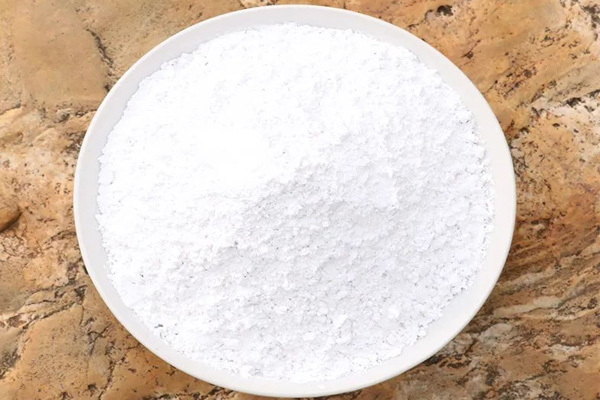
Guangxi Six major application fields and index requirements of nano calcium carbonate. Nano calcium carbonate refers to a functional inorganic filler with a particle size of 1-100nm, widely used in rubber, plastics, papermaking, ink, coatings, sealants and adhesives, medicine, toothpaste, food and other fields. However, different applications have different requirements for the particle size, crystal form, oil absorption, and dispersibility of Guangdong nano calcium carbonate.
1、 Guangxi Application of nano calcium carbonate in plastics
In the processing and production of plastics, ordinary Guangdong calcium carbonate products can only be used as general fillers, while modified Guangdong nano calcium carbonate, in addition to being used as a filler, can also play the role of an activator and reinforcing agent. It can increase the volume of plastic products, improve the hardness and strength of the products, improve the processing performance of plastics, and enhance the heat resistance, bending strength, elastic modulus and other performance indicators of plastic products.
Guangxi Nano calcium carbonate has been widely used in the processing of various plastics such as PVC, PS, and PP, with the largest amount used in PVC, especially in products such as wires and cables and pipes, Guangxi Nano calcium carbonate has a good reinforcing and toughening effect on PVC plastics. Its main nano characteristics make the processed PVC plastics have good strength, barrier properties, flame retardancy, thermal stability and other mechanical properties.
The technical requirements of the plastics industry for Guangdong nano calcium carbonate are mainly:
Oil absorption: The plastics industry generally has very low requirements for the oil absorption of nano calcium carbonate, because the particle size of Guangdong nano calcium carbonate is small and the specific surface area is large. If the oil absorption is large, more plasticizer will be consumed during mixing, increasing the viscosity of the system, which not only affects the processing performance but also increases the production cost.
Crystal form: Mainly cubic and spherical. These crystal forms have lower flow resistance, are easy to process, and do not affect the surface gloss of plastic products.
Particle size: The particle size of Guangdong nano calcium carbonate used in plastics is generally controlled at around 100nm. If the particle size is too large, the effect of nano calcium carbonate cannot be reflected, and the appearance of the product will be affected; if the particle size is too small, the surface energy will increase, the particles will agglomerate seriously, and it will be difficult to completely disperse during processing, resulting in particles on the surface of the product.
Dispersibility: Highly dispersible Guangdong nano calcium carbonate should be selected. If Guangdong nano calcium carbonate agglomerates seriously, the secondary particle size will be much larger than the primary particle size, and the shear force of plastic processing mixing is not too strong. Some seriously agglomerated nano calcium carbonate is difficult to disperse, and local defects will occur during application, resulting in product quality problems.
Moisture content: Moisture content should be controlled below 0.5%. If the moisture content is too high, bubbles or voids will appear on the surface of the plastic.
pH value: Guangxi The pH value of nano calcium carbonate should be controlled below 10. If the pH value is too high, it will affect the whiteness and surface gloss of the product, making the appearance worse. At the same time, a high pH value will also increase the viscosity of the system, affecting the processing process.
Among various non-metallic mineral powder materials used in the plastics industry, Guangdong calcium carbonate has the largest usage, accounting for about 60-70% of the total amount of plastic additives. However, there are still many problems in high-performance application research, especially how to solve the agglomeration of nano calcium carbonate, how to improve the dispersion effect of nano calcium carbonate, and how to improve the bonding strength of composite materials have not been effectively solved.
2、 Guangxi Application of nano calcium carbonate in rubber
Guangxi Nano calcium carbonate is mainly used in the rubber industry for tires, wires, cables, and rubber products, and can increase volume, reduce costs, and improve rubber processing performance. Currently, the Guangxi calcium carbonate used in rubber is mainly Guangdong heavy calcium carbonate and ordinary light calcium carbonate, Guangxi and the application fields and scope of nano calcium carbonate are also expanding. Adding Guangxi nano calcium carbonate to rubber products is far superior to ordinary calcium carbonate in terms of elongation, compression deformation, yield resistance, and tear resistance. Through special processing, Guangxi nano calcium carbonate has high surface activity. Under ultraviolet irradiation, it can precipitate freely moving electrons, which are very easy to react with oxygen or organic matter, killing viruses and bacteria. Therefore, nano calcium carbonate also has the effect of sterilization and disinfection.
Tires: Guangxi Nano calcium carbonate can partially replace carbon black and white carbon black in the production of automobile tires, but there is still a gap in the reinforcing effect. Therefore, it is mainly used in parts with less stress in applications, such as tire sidewalls, carcass glue, airtight layer glue, inner layer glue, and buffer glue. In production, the combination of nano calcium carbonate and active zinc oxide can significantly improve the strength of tire tread glue.
Hoses and tapes: Guangxi Nano calcium carbonate is mainly used in hoses and tapes to reinforce, whiten, and improve the dispersibility of the rubber.
Wires and cables: Guangxi Nano calcium carbonate is generally used in the protective sheaths and rubber materials of mining wires and cables, high-voltage wires and cables, and marine wires and cables.
The rubber industry Guangxi has the following technical requirements for nano calcium carbonate:
Oil absorption: The rubber industry Guangxi has higher requirements for the oil absorption of nano calcium carbonate. The higher the oil absorption, the better the wetting and reinforcing properties for rubber.
Crystal form: Because the rubber requires very high reinforcing performance, Guangxi the crystal form of nano calcium carbonate should be mainly chain-like or chain-locked. During processing, the chain segments will entangle with each other, which can enhance the strength of the system.
Particle size: The particle size of nano calcium carbonate used in rubber is generally 80-120nm. Particles that are too large will not provide reinforcement, while particles that are too small will increase the contact area with the rubber, making dispersion difficult and affecting rubber mixing.
Moisture: Moisture content should be no more than 0.5%. If the moisture content is too high, the scorch time of vulcanization will be prolonged, which is not conducive to improving the vulcanization rate.
pH value: The pH value of nano calcium carbonate mainly affects its vulcanization rate. It should generally be controlled at 9.5-10.5. If the pH value is too low, the vulcanization rate will slow down, reducing efficiency and increasing energy consumption.
Adding Guangxi nano calcium carbonate to rubber can significantly improve the reinforcing effect, and can also improve the material's anti-aging, oil resistance, and dispersibility. Compared with ordinary light calcium products, nano calcium carbonate has a better reinforcing effect, but it is inferior to carbon black and white carbon black. If nano calcium carbonate completely replaces carbon black and white carbon black, the strength of the material will be reduced. If the amount used is too large, it will also cause sticking of the rollers. Therefore, reasonable adjustment and continuous optimization are needed in the technical formula.
3、 Guangxi Application of nano calcium carbonate in adhesives
Adhesives are mainly composed of base gum, curing agent, filler, coupling agent, catalyst, etc. With the rapid development of China's real estate, packaging, and building materials industries, the demand for adhesives has increased dramatically. Nano calcium carbonate, as one of the important fillers in adhesives, is not only low in price but also has good compatibility with adhesives. It can accelerate the crosslinking process of the adhesive, improve thixotropy, and improve adhesion, tensile strength, and reinforcing effect. Currently, the application technology of nano calcium carbonate in polysiloxane sealants is relatively mature, while its application in polyurethane adhesives is still in its infancy. Polyurethane adhesives have excellent adhesion and aging resistance, and also have surface paintability that silicone adhesives do not have. In applications requiring non-pollution, good adhesion, and weather resistance, polyurethane adhesives have obvious advantages.
The adhesive industry's Guangxi has the following technical requirements for nano calcium carbonate:
Oil absorption: Oil absorption is an indicator that silicone adhesive manufacturers pay close attention to. It directly affects the wettability of Guangdong nano calcium carbonate in the adhesive. Higher Guangxi Nano calcium carbonate has advantages in mechanical properties and thixotropy, but it will cause the colloid to become viscous, consume more auxiliaries, and increase production costs. Different manufacturers have different requirements for the oil absorption value of nano calcium carbonate, depending on the specific situation.
Crystal form: Generally cubic or rhombohedral, and it also needs to be adapted to the product's technical requirements and production equipment.
Particle size: Generally controlled at 60-100nm. If the particle size is too large, it will reduce the mechanical properties of the adhesive and cause the thixotropy of the adhesive to deteriorate, making it easy to sag; if the particle size is too small, nano calcium carbonate will agglomerate severely, making kneading difficult during production and easily leading to poor dispersibility and pinholes on the surface of the colloid.
Moisture: Nano calcium carbonate used in adhesives requires the lowest possible moisture content, generally less than 0.5%. If Guangxi the moisture content of nano calcium carbonate is high, the number of hydroxyl groups on its surface increases, and the aggregates tend to agglomerate. Under the action of the base gum, a three-dimensional network is formed, increasing the viscosity of the adhesive, prolonging the mixing time, reducing output, and increasing energy consumption; excessive moisture will also react with the auxiliaries in the adhesive production to generate particles, resulting in poor dispersibility of the product and the appearance of particles. In polyurethane adhesives, the presence of a large number of isocyanate groups is easily hydrolyzed, and the generated CO2 causes foaming on the product surface.
pH value: Calcium carbonate is a weak alkaline salt with a pH value of 8-10. The surface coating agent of nano-active calcium carbonate is generally a weak organic acid or organic acid salt, which has a certain neutralizing effect on its surface. In the production process, the phenomenon of calcium carbonate returning to alkali is very common. If not handled properly, the existing alkali will react with the acidic components in the adhesive to produce water, causing the siloxane to hydrolyze and produce inorganic particles, which will not only worsen the appearance of the product but also affect its mechanical properties.
Specific surface area: Due to the particle size control at 60-100nm, the corresponding specific surface area should be controlled at 20-25m2/g. When the specific surface area is too large, although the reinforcing effect is enhanced, it will also cause the extrusion performance of the adhesive to deteriorate and affect the dispersion effect of the product.
Currently, many domestic enterprises are conducting in-depth research on new adhesives, such as polyurethane adhesives and MS adhesives. Different systems have different technical requirements for nano calcium carbonate. With the deepening of research and the maturity of technology, nano calcium carbonate will play a greater role in the field of new adhesives.
4、 Guangxi Application of nano calcium carbonate in coatings
Heavy calcium carbonate, light calcium carbonate, and nano calcium carbonate are all widely used in coatings. Compared with heavy calcium or ordinary light calcium, nano calcium carbonate in coatings not only has a good reinforcing effect but also can improve the hiding power, gloss, transparency, quick-drying properties, and stability of the coating. In some industries, such as automotive coatings and building coatings, nano calcium carbonate can partially or completely replace the expensive titanium dioxide to reduce enterprise costs.
The main technical indicators of nano calcium carbonate for PVC plastisol systems are:
Oil absorption: Generally, a lower oil absorption value is required. If the oil absorption value is too high, it will cause the viscosity of the system to increase, and more plasticizers will be needed, increasing production costs. However, different products have different requirements for the oil absorption value of nano calcium carbonate, depending on the specific situation. For example, some customers need products with high oil absorption, high viscosity, and high yield value.
Crystal form: Generally cubic.
Particle size: Generally controlled at 60-100nm. If the particle size is too large, it will reduce the viscosity of the system and affect its mechanical properties, and it will also cause the thixotropy of the system to deteriorate; if the particle size is too small, nano calcium carbonate will agglomerate severely, easily leading to poor dispersibility and pinholes on the surface of the colloid. At the same time, it will cause an increase in viscosity and yield value.
In addition to the above conventional test indicators, nano calcium carbonate used in PVC plastisol systems also has specific requirements for some application properties:
It exhibits good thixotropy, namely high shear thinning and low shear thickening. When used in PVC plastisol systems, the viscosity of nano calcium carbonate decreases under high shear rates, facilitating the flow of the coating. Conversely, the increased viscosity under low shear rates before and after application effectively prevents sagging.
It possesses a relatively high yield value, enabling the coating to have better strength and preventing disruption from minor disturbances and external impacts.
It has good quality stability.
Currently, domestic nano calcium carbonate lags behind imported products in terms of quality stability. Often, some better indicators are difficult to consistently achieve and maintain.
5. Applications of Nano Calcium Carbonate in Ink
Ink is mainly composed of pigments, binders, fillers, and additives. Modified nano calcium carbonate exhibits good compatibility with binders and offers advantages such as high gloss, strong stability, strong adaptability, no impact on ink factors, and drying performance. It can comprehensively improve ink quality and reduce production costs.
Nano calcium carbonate used in inks requires higher performance, specifically:
After use, the ink should exhibit good dispersibility, absorbency, transparency, gloss, and good hiding power and printability. The quality of dispersibility determines the gloss, fluidity, and transparency of the ink.
Guangxi The crystal form of nano calcium carbonate is mainly cubic. Cubic nano calcium carbonate has characteristics such as low oil absorption, good fluidity, and easy dispersion.
The particle size is generally between 20 and 100 nm. Fluidity is related to crystal form and particle size. Cubic and spherical crystal forms exhibit greater fluidity, while chain-like forms exhibit lower fluidity. Manufacturers need to select suitable nano calcium carbonate based on the type of ink being produced.
Gloss is an important indicator of ink and is related to the crystal form and particle size distribution of calcium carbonate. Cubic nano calcium carbonate has a narrower particle size distribution, resulting in neat arrangement in the ink coating, making the printed surface smooth and exhibiting good gloss.
The whiteness requirement is relatively low, as other pigments need to be added; excessively high whiteness would make coloring difficult.
In the ink industry, nano calcium carbonate plays a crucial role. The quality of the ink determines the quality of the printed matter. Ink formulated with nano calcium carbonate is smooth, stable, has good printability and strong hiding power, and exhibits good ink absorption during printing, contributing to faster drying.
6. Guangxi Applications of Nano Calcium Carbonate in Papermaking
In the papermaking industry, the applications of nano calcium carbonate are mainly in the following aspects:
As a papermaking filler, nano calcium carbonate has small and uniform particle size, resulting in less equipment wear and tear, making paper products delicate and uniform. Simultaneously, its small particle size, high oil absorption, and large specific surface area are beneficial for pigment firmness. Its good whiteness, high brightness, and good light-shielding properties can improve the whiteness and light-shielding properties of paper. It can also save pulp usage, reduce costs, and contribute to environmental protection.
In cigarette paper, the addition amount of nano calcium carbonate is approximately 45% to 50% because nano calcium carbonate has a high refractive index and good opacity, preventing the tobacco inside the cigarette paper from being seen from the outside. When the cigarette burns, the CO2 released by calcium carbonate controls the burning speed to some extent without extinguishing the cigarette. At the same time, calcium carbonate can keep the ash after burning in its original position. It can also increase the breathability of the paper, reducing the tar content in the cigarette.
In high-end sanitary paper, especially in feminine hygiene products and baby products such as sanitary napkins, diapers, and baby diapers, the amount of nano calcium carbonate used is large. It is mainly used to produce polyethylene films that are breathable but waterproof. In addition, due to the small particle size of nano calcium carbonate, the resulting products are delicate, do not irritate the skin, and do not cause sensory discomfort to the human body.
Applications in paper coating. Unlike papermaking fillers, the nano calcium carbonate used for coating is mainly transported in the form of slurry. The advantages are saving production energy consumption, reducing costs, being dust-free and environmentally friendly, and being directly pumpable for use, simplifying the production process. Due to its high whiteness, large specific surface area, high activity, and good reinforcing properties, nano calcium carbonate can improve the gloss, whiteness, smoothness, surface strength, and ink absorbency of coated paper.
Different products have different requirements for the crystal form of nano calcium carbonate. When used as a papermaking filler, it is mainly spindle-shaped, chain-like, and spherical; when used in cigarette paper, it is mainly spindle-shaped and needle-shaped; when used in paper coating, it is mainly spindle-shaped, flaky, and cubic.
Guangxi Nano calcium carbonate still has enormous development potential in the papermaking industry. However, many technical bottlenecks and application problems need to be solved during its use, and currently, high-end nano calcium carbonate products for papermaking still rely on imports. However, with the continuous development of papermaking technology and the shift of papermaking processes from acidic sizing to neutral and alkaline sizing, good opportunities have been provided for the development of calcium carbonate in papermaking, and the application of nano calcium carbonate will become more widespread.
Related News

Contact Person: Mr. Li
No. 8 Dada Street, Beitou Environmental Protection Water Conservancy Three-sheng Stacking Yard, Bonded Port Area, Qinzhou Port Area, China (Guangxi) Pilot Free Trade Zone
Online Message
*Please fill in the correct information