


News
LONGHUA NEW MATERIALS
Applications and Quality Requirements of Calcium Carbonate in the Food Industry
Release Time:
2023-05-30 22:01
Calcium carbonate is an inorganic compound with a wide range of sources and abundant resources. It is a common substance on Earth, found in rocks such as aragonite, calcite, chalk, limestone, marble, and travertine, and is also a major component of animal bones and shells. It is widely used in various fields, including industry, food additives, medicine, feed additives, building materials, rubber, plastics, papermaking, inks, daily cosmetics, coatings, glass, asphalt, insulation materials, adhesives, sealants, military and defense industries, etc.
In the food industry, calcium carbonate is mainly added to food as a food additive, serving as a nutritional enhancer and modifier. The calcium carbonate used in food additives can be food-grade calcium carbonate produced by precipitation, or it can be high-quality calcium carbonate made from crushed limestone, calcite, and oyster shells.

Figure 1: Children's calcium tablets (health food)
(Main ingredients: Calcium carbonate, Vitamin D)
The following will specifically introduce the application of calcium carbonate in food additives.
I. Examples of the application of calcium carbonate in the food industry
1. Used as a food nutritional enhancer
Calcium carbonate can be used as a nutritional enhancer in food. The main component of calcium supplements that people often consume is calcium carbonate; some directly use heavy calcium carbonate as a calcium supplement.
Common calcium-containing foods include high-calcium milk, high-calcium biscuits, high-calcium noodles, calcium candies, etc. Nutritionally enhanced wheat flour also adds calcium carbonate as a calcium supplement. Many of these foods use limestone crushed to a certain fineness as the calcium supplement.

Figure 2: Nutritionally enhanced high-calcium milk
(Main enhancers include calcium carbonate, calcium lactate, calcium phosphate, milk calcium, and calcium citrate)
In addition, calcium carbonate is also an ideal raw material for high-purity pharmaceutical-grade calcium citrate, calcium lactate, calcium citrate-malate, and calcium gluconate and other organic calcium salts, meeting the strict requirements of international market customers for low lead and low impurity content in products.
2. Flour leavening agent and yeast nutrient regulator
In addition to its calcium-enhancing effect when added to flour, calcium carbonate can also whiten flour, improve its appearance, and an appropriate amount of calcium carbonate can be added when preparing compound leavening agents. Therefore, adding an appropriate amount of calcium carbonate to some flour products can have a whitening and leavening effect.
In addition, calcium carbonate can also be used as a hydrogen ion regulator and as a dough regulator for yeast nutrients in bread making. It is usually used in flour at less than 0.25% of the theoretical calcium content, with a particle size of around 5μm.

Figure 3: Soft and porous bread
3. Used for deacidification of wine
When making wine, for fruit juice with excessive acidity (over 1.5%), calcium carbonate (or potassium carbonate) can be used to remove some of the acid. To remove 0.1% of acid from 100L of grape juice, 66g of calcium carbonate is needed. Deacidification can be done after fermentation.
The working principle is that calcium carbonate reacts with tartaric acid to form calcium tartrate precipitate at the bottom of the wine barrel, thereby separating tartaric acid from the wine, facilitating the separation of acid and wine.

Figure 4: Calcium carbonate can be used for wine deacidification
4. Chewing gum adjuvant
Chewing gum is also called chewing gum or masticatory gum. A good chewing gum product is made by blending various food additives such as gum base, sweeteners, flavors, emulsifiers, softeners, and fillers.
Fine powder calcium carbonate or talc used as fillers can appropriately suppress the elasticity of chewing gum and prevent its stickiness.
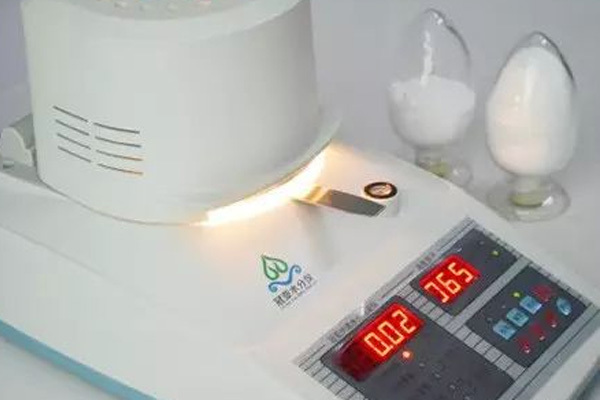
Figure 5: Calcium carbonate can be used as a chewing gum filler
II. Characteristics of food-grade calcium carbonate
1. High purity and free of harmful substances
High purity (over 99%), high whiteness, almost no impurities, contains no heavy metals harmful to the human body, and can pass national food safety tests.
2. Clean and pollution-free processing
Different from industrial-grade calcium carbonate in production, the ore raw materials used to produce food-grade calcium carbonate must be high-quality, high-content, pure natural ores. The processing process must be free of pollution and impurities, and the packaging process must also ensure cleanliness and no pollution.
3. More expensive than industrial calcium carbonate
The better the quality, the higher the purity and whiteness, and the higher the fineness, the more expensive the price. Therefore, the price of food-grade calcium carbonate is several times higher than that of industrial-grade calcium carbonate. There is a type on the market that is produced from biological sources such as pearls, shells, corals, and eggshells. This type of calcium carbonate has a higher cost and a relatively higher price.
III. Quality standards for food-grade calcium carbonate
As calcium carbonate is used in food additives, its quality standards are becoming increasingly stringent. GB 1886.214—2016 stipulates the quality standards and testing methods for food-grade calcium carbonate. Its main quality indicators and testing methods are as follows:
1. Calcium carbonate content (on a dry basis). It is required to be between 98.0% and 100.5%. It is tested according to Appendix A, A.4 in GB 1886.214—2016 or by complexometric titration.
2. Content of hydrochloric acid insoluble matter. It is required not to exceed 0.2%. It is tested by the gravimetric method according to Appendix A, A.5 in GB 1886.214—2016.
3. Free alkali content. Requires testing. Test according to acid-base titration method A.6 in Appendix A of GB 1886.214—2016.
4. Magnesium and alkali metal content. Must not exceed 1%. Test according to gravimetric method A.7 in Appendix A of GB 1886.214—2016.
5. Loss on drying content. Must not exceed 2.0%. Test according to the determination of loss on drying A.8 in Appendix A of GB 1886.214—2016. A WL-90 rapid moisture meter can be used for detection; the test results must be consistent with A.8 in Appendix A of GB 1886.214—2016.
6. Heavy metal content. Must not exceed 300 mg per kilogram. Test according to the colorimetric method A.9 in Appendix A of GB 1886.214—2016.
For more test details, see the following article: GB1886.214—2016, National Food Safety Standard, Food Additive Calcium Carbonate.
IV. Impact of Loss on Drying on Food-Grade Calcium Carbonate
Loss on drying (moisture content) is an important technical indicator for food additives, and is closely related to the stability of food additives and the growth and reproduction of microorganisms. Therefore, moisture content has a significant impact on the stability and shelf life of food additives.
Loss on drying refers to the percentage of volatile substances (mainly water, but also other volatile substances) that can be removed from the sample under certain temperature conditions, calculated as the percentage of weight loss.
GB 1886.214—2016 specifies the method for determining the loss on drying of food-grade calcium carbonate. This method is an arbitration method, but it is time-consuming and difficult to meet the rapid testing needs of enterprises. In actual detection, a WL-90 rapid moisture meter can be used to analyze the moisture and volatile matter content (loss on drying) of food-grade calcium carbonate. This moisture meter is fast and accurate, improving testing efficiency, meeting the production and testing needs of enterprises, and safeguarding the quality of food additives.
6.png
(Guanya rapid moisture meter in operation)
V. Conclusion
Food additives play an important role in food processing, improving the color, aroma, and taste of food, adjusting the nutritional structure of food, improving food processing conditions, and extending the shelf life of food. With China's rapid economic development over the past few decades and the continuous improvement of people's living standards, people are paying more and more attention to food safety and hygiene issues, gradually shifting from simply having enough to eat to eating well, and then to eating healthily. With increasing demands, various new foods have emerged, and to meet consumer needs and improve the flavor and color of food, various food additives have also been developed.
As an emerging industry, food additives have experienced significant development in recent years. However, due to the influence of profit, some unscrupulous businesses misuse food additives, leading to frequent food safety incidents and threatening the safety of consumers.
Therefore, for the quality of food-grade calcium carbonate, we should adopt higher standards and stricter requirements, using advanced testing equipment to meet market demands.
Related News

Contact Person: Mr. Li
No. 8 Dada Street, Beitou Environmental Protection Water Conservancy Three-sheng Stacking Yard, Bonded Port Area, Qinzhou Port Area, China (Guangxi) Pilot Free Trade Zone
Online Message
*Please fill in the correct information