


News
LONGHUA NEW MATERIALS
Calcium carbonate, other names
Release Time:
2023-06-06 20:54
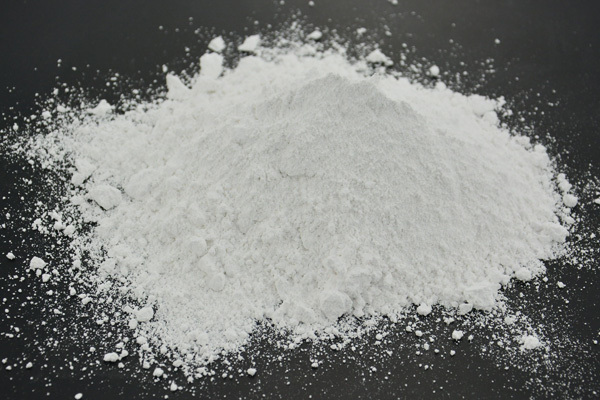
Calcium carbonate, also known as calcite, limestone, heavy calcium carbonate, and light calcium carbonate.
Applications of Calcium Carbonate in Plastics
Calcium carbonate is widely used as a filler in resins such as polyvinyl chloride (PVC), polyethylene (PE), polypropylene (PP), and acrylonitrile butadiene styrene (ABS). Adding calcium carbonate plays a role in improving certain properties of plastic products to expand their application range. In plastic processing, they can reduce resin shrinkage, improve rheology, and control viscosity. It can also have the following effects:
1. Improve the dimensional stability of plastic products
The addition of calcium carbonate acts as a skeleton in plastic products, playing a significant role in the dimensional stability of plastic products.
2. Improve the hardness and rigidity of plastic products
In plastics, especially soft polyvinyl chloride, hardness increases with the increasing amount of calcium carbonate added, while elongation decreases with increasing hardness. Calcium carbonate with fine particles and high oil absorption has a high hardness growth rate. Conversely, calcium carbonate with coarse particles and low oil absorption has a low hardness growth rate. In soft polyvinyl chloride, the hardness growth rate of heavy calcium carbonate is low, followed by precipitated calcium carbonate (light).
Calcium carbonate generally cannot act as a reinforcing agent in plastics (resins). Calcium carbonate particles can often be wetted by the resin, so the normal effect of adding calcium carbonate is to increase the rigidity of the resin, as well as the modulus of elasticity and hardness. As the amount added increases, both tensile strength and elongation decrease.
Different calcium carbonates, with different amounts added, will result in different hardness.
3. Improve plastic processing performance
The addition of calcium carbonate can change the rheological properties of plastics. Calcium carbonate powder is often added in relatively large quantities, which helps with mixing with other components and facilitates the processing and shaping of plastics.
The addition of calcium carbonate, especially surface-treated calcium carbonate, can not only improve the hardness of the product but also improve the surface gloss and smoothness.
The addition of calcium carbonate can reduce the shrinkage rate, linear expansion coefficient, and creep performance of plastic products, creating conditions for processing and shaping.
4. Improve the heat resistance of plastic products
Adding calcium carbonate to general plastic products improves heat resistance. For example, in polypropylene, adding about 40% calcium carbonate increases heat resistance by about 200°C. When the filling ratio is ≤20%, the heat-resistant temperature increases by 8-130°C.
5. Improve the light scattering of plastics
In plastic products, some products require whitening and opacity, while others require matte finish. The addition of calcium carbonate can play a role in this aspect.
Calcium carbonate with a whiteness of over 90 has a significant whitening effect in plastic products. In combination with titanium dioxide and lithopone, the matte finish of plastic products is greatly improved.
In calcium plastic paper and low-density polyethylene (LDPE) and high-density polyethylene (HDPE) films, adding calcium carbonate can achieve light scattering and matte effects, making them suitable for writing and printing.
Calcium carbonate with good whiteness can also replace expensive white pigments.
6. Can give products certain special properties.
The addition of calcium carbonate to cable materials has a certain insulating effect, and the addition of calcium carbonate can improve the electroplating and printing performance of certain products.
The addition of microfine or ultrafine calcium carbonate to polyvinyl chloride (PVC) has a certain flame-retardant effect.
7. Reduce the cost of plastic products
The price of ordinary light calcium carbonate and heavy calcium carbonate is much lower than that of plastics. The addition of calcium carbonate will reduce the cost of plastic products. Therefore, it is called a filler or extender abroad.
At present, the main goal of adding calcium carbonate is to reduce the cost of plastics. With the improvement of the surface properties and the controllability of the shape and particle size of calcium carbonate, calcium carbonate will gradually become a functional filler for reinforcement or imparting functionality.
Calcium carbonate is a commonly used filler in the production and processing of PVC products. Its main purpose is to increase the volume of PVC products to reduce production costs.
Currently, two main types of calcium carbonate are used in the production and processing of PVC products. One is calcium carbonate obtained from natural limestone through mechanical pulverization methods, such as pulverization using a Raymond mill, to obtain different finenesses. This type of calcium carbonate is called heavy calcium carbonate, and its quality is determined by the grade of natural limestone and its fineness. The reasonable use of heavy calcium carbonate can improve the heat resistance, rigidity, dimensional stability, and processability of PVC products. The other is obtained by selecting high-grade limestone, calcining it to decompose it into calcium oxide, reacting it with water to form calcium hydroxide, and then introducing carbon dioxide to form calcium carbonate through precipitation. This type of calcium carbonate is called light calcium carbonate. A small amount of light calcium carbonate can improve the tensile strength of PVC products. The quality of light calcium carbonate is determined not only by the grade of natural calcium carbonate but also by the calcination and other chemical reaction conditions and the grading fineness. The price of light calcium carbonate should be more than twice that of heavy calcium carbonate of the same fineness.
In the processing of PVC products, adding a large amount of calcium carbonate will reduce product quality. However, if low-quality calcium carbonate is added, the quality of the product will decrease significantly. Adding the same amount of calcium carbonate, superior calcium carbonate and inferior calcium carbonate will result in drastically different properties of PVC products. Usually, some manufacturers or distributors will mix light calcium carbonate with heavy calcium carbonate and sell it at the price of light calcium carbonate. This phenomenon can occur in light calcium carbonate of various finenesses. In addition, some small factories have no strict requirements for raw material sources and production processes, resulting in poor quality.
A large amount of calcium carbonate is added to paper. The large-scale use of calcium carbonate in the papermaking industry is based on the international transition of the papermaking industry from acidic to alkaline or neutral processes.
Generally, the price of lower-quality calcium carbonate is lower. Some manufacturers will purchase such calcium carbonate to reduce production costs, but this often backfires because its addition amount is relatively lower than that of superior calcium carbonate; otherwise, it will greatly reduce product quality.
Related News

Contact Person: Mr. Li
No. 8 Dada Street, Beitou Environmental Protection Water Conservancy Three-sheng Stacking Yard, Bonded Port Area, Qinzhou Port Area, China (Guangxi) Pilot Free Trade Zone
Online Message
*Please fill in the correct information